My Natural Sciences Glossary
Olivier Gauthier/ My Natural Sciences Glossary
The goal of this glossary is to explain in details specific disciplines related to natural sciences, because it is a very large subject that inglobe a lot things that is somehow related to our comprehension of our world. And it is important to know to which field of study natural sciences touch.
- astronomy
- noun
- '' Astronomy is a natural science that studies celestial objects and phenomena. It uses mathematics, physics, and chemistry in order to explain their origin and evolution. ''
- Example: '' More generally, astronomy studies everything that originates beyond Earth's atmosphere. Cosmology is a branch of astronomy that studies the universe as a whole. ''
- en: astronomie

- astrophysics
- noun
- '' Astrophysics is a science that employs the methods and principles of physics in the study of astronomical objects and phenomena. As one of the founders of the discipline said, Astrophysics « seeks to ascertain the nature of the heavenly bodies, rather than their positions or motions in space–what they are, rather than where they are. » ''
- Example: '' Among the subjects studied are the Sun, other stars, galaxies, extrasolar planets, the interstellar medium and the cosmic microwave background. Emissions from these objects are examined across all parts of the electromagnetic spectrum, and the properties examined include luminosity, density, temperature, and chemical composition. ''
- en: astrophysique

- atmospheric sciences
- noun
- '' Atmospheric science is the study of the Earth's atmosphere and its various inner-working physical processes. ''
- Example: '' Meteorology includes atmospheric chemistry and atmospheric physics with a major focus on weather forecasting. Climatology is the study of atmospheric changes (both long and short-term) that define average climates and their change over time, due to both natural and anthropogenic climate variability. Aeronomy is the study of the upper layers of the atmosphere, where dissociation and ionization are important. ''
- en: sciences atmosphériques

- biology
- noun
- '' Biology is the scientific study of life. It is a natural science with a broad scope but has several unifying themes that tie it together as a single, coherent field. ''
- Example: '' Biologists are able to study life at multiple levels of organization. From the molecular biology of a cell to the anatomy and physiology of plants and animals, and evolution of populations. ''
- en: biologie

- biophysics
- noun
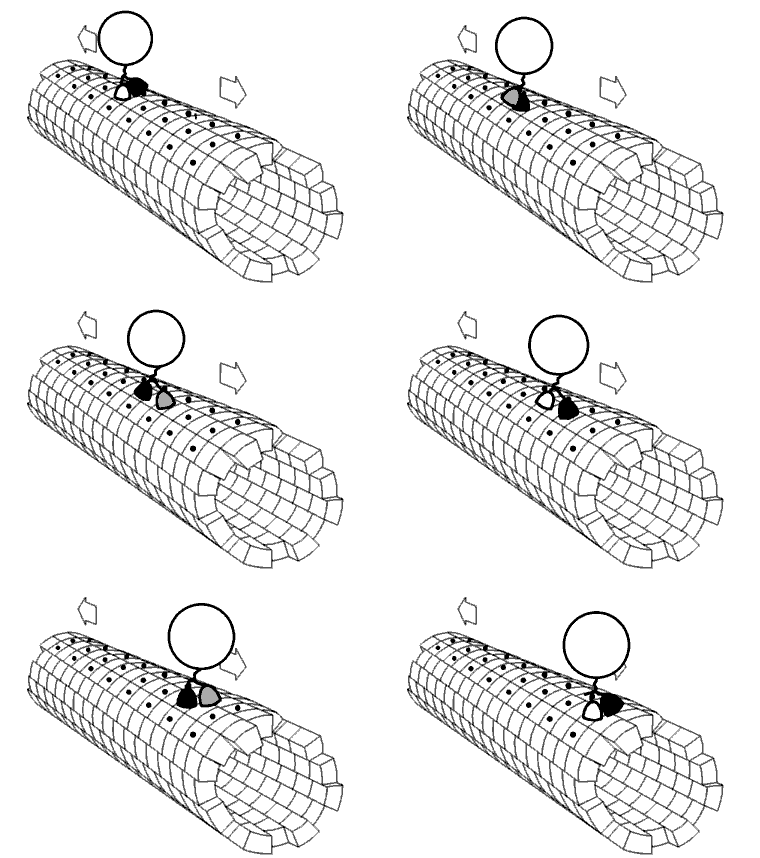
- '' Biophysics is an interdisciplinary science that applies approaches and methods traditionally used in physics to study biological phenomena. ''
- Example: '' Biophysics covers all scales of biological organization, from molecular to organismic and populations. Biophysical research shares significant overlap with biochemistry, molecular biology, physical chemistry, physiology, nanotechnology, bioengineering, computational biology, biomechanics, developmental biology and systems biology. ''
- en: biophysique
- chemical physics
- noun
- '' Chemical physics is a subdiscipline of chemistry and physics that investigates physicochemical phenomena using techniques from atomic and molecular physics and condensed matter physics; it is the branch of physics that studies chemical processes from the point of view of physics. ''
- Example: '' Chemical physicists commonly probe the structure and dynamics of ions, free radicals, polymers, clusters, and molecules. Areas of study include the quantum mechanical behavior of chemical reactions, the process of solvation, inter- and intra-molecular energy flow, and single entities such as quantum dots. ''
- en: physique chimique

- chemistry
- noun
- '' Chemistry is the scientific study of the properties and behavior of matter. It is a natural science that covers the elements that make up matter to the compounds composed of atoms, molecules and ions: their composition, structure, properties, behavior and the changes they undergo during a reaction with other substances. ''
- Example: find the concentration of this solution
- en: chimie

- Earth sciences
- noun
- '' Earth science or geoscience includes all fields of natural science related to planet Earth. This is a branch of science dealing with the physical and chemical constitution of Earth and its atmosphere. ''
- Example: '' Some Earth scientists use their knowledge of the planet to locate and develop energy and mineral resources. Others study the impact of human activity on Earth's environment, and design methods to protect the planet. ''
- en: sciences de la Terre

- engineering
- noun
- '' Engineering is the use of scientific principles to design and build machines, structures, and other items, including bridges, tunnels, roads, vehicles, and buildings. ''
- Example: '' The steam engine, the major driver in the Industrial Revolution, underscores the importance of engineering in modern history. ''
- en: ingénierie

- experiment
- noun
- '' An experiment is a procedure carried out to support or refute a hypothesis. ''
- Example: '' Even very young children perform rudimentary experiments to learn about the world and how things work. ''
- en: expérimentation

- laboratory
- noun
- '' A laboratory is a facility that provides controlled conditions in which scientific or technological research, experiments, and measurement may be performed. ''
- Example: '' A physics laboratory might contain a particle accelerator or vacuum chamber, while a metallurgy laboratory could have apparatus for casting or refining metals or for testing their strength. ''
- en: laboratoire

- logic
- noun
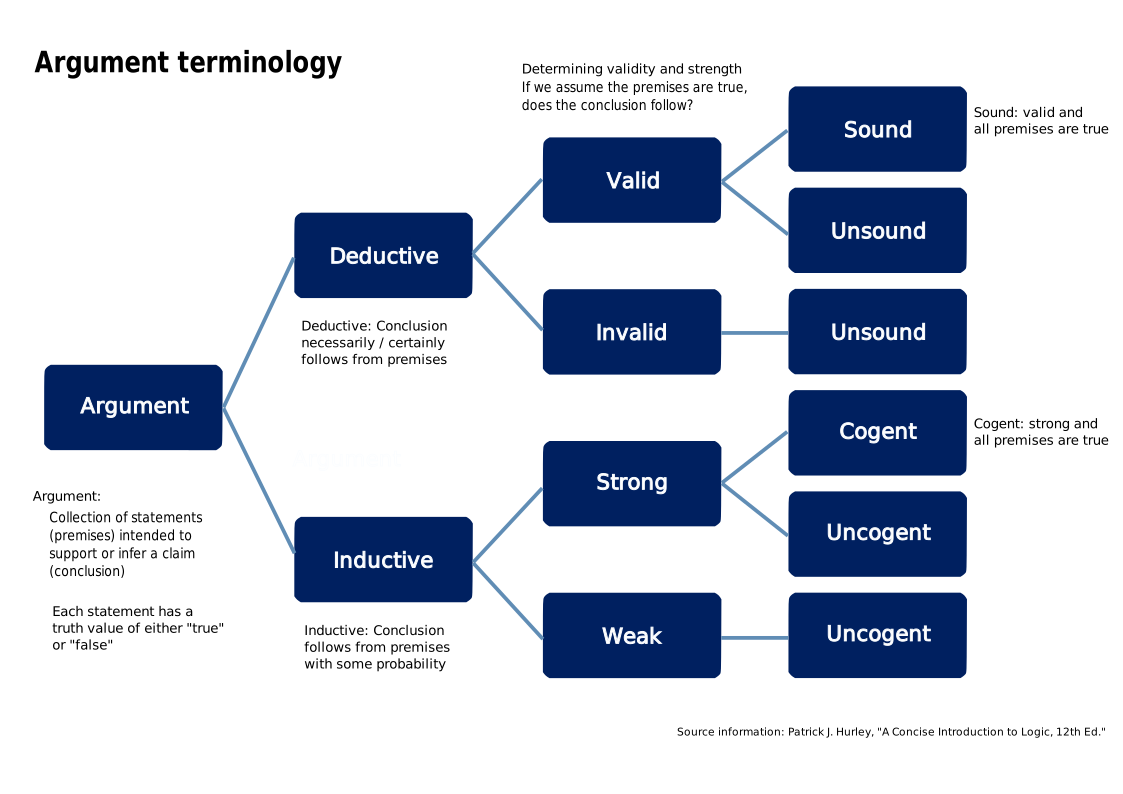
- '' Logic[1] is an interdisciplinary field which studies truth and reasoning.''
- Example: '' Informal logic seeks to characterize valid arguments informally, for instance by listing varieties of fallacies. Formal logic represents statements and argument patterns symbolically, using formal systems such as first order logic. ''
- en: logique
- mathmatics
- noun
- '' Mathematics includes the study of such topics as quantity (number theory), structure (algebra), space (geometry), and change (analysis). It has no generally accepted definition. ''
- Example: find the area of this square.
- en: mathématiques

- measurement
- noun
- '' Measurement is the quantification of attributes of an object or event, which can be used to compare with other objects or events. ''
- Example: a tape measure
- en: mesure

- microbiology
- noun
- '' Microbiology is the scientific study of microorganisms, those being unicellular (single cell), multicellular (cell colony), or acellular (lacking cells). ''
- Example: '' Microbiologists traditionally relied on culture, staining, and microscopy. However, less than 1% of the microorganisms present in common environments can be cultured in isolation using current means. Microbiologists often rely on molecular biology tools such as DNA sequence based identification, for example the 16S rRNA gene sequence used for bacteria identification. ''
- en: microbiologie

- natural sciences
- noun
- '' Natural science is a branch of science concerned with the description, understanding and prediction of natural phenomena, based on empirical evidence from observation and experimentation. Mechanisms such as peer review and repeatability of findings are used to try to ensure the validity of scientific advances. ''
- Example: '' Natural science can be divided into two main branches: life science and physical science. Life science is alternatively known as biology, and physical science is subdivided into branches: physics, chemistry, earth science, and astronomy. These branches of natural science may be further divided into more specialized branches (also known as fields). As empirical sciences, natural sciences use tools from the formal sciences, such as mathematics and logic, converting information about nature into measurements which can be explained as clear statements of the "laws of nature". ''
- en: sciences de la nature

- oceanography
- noun
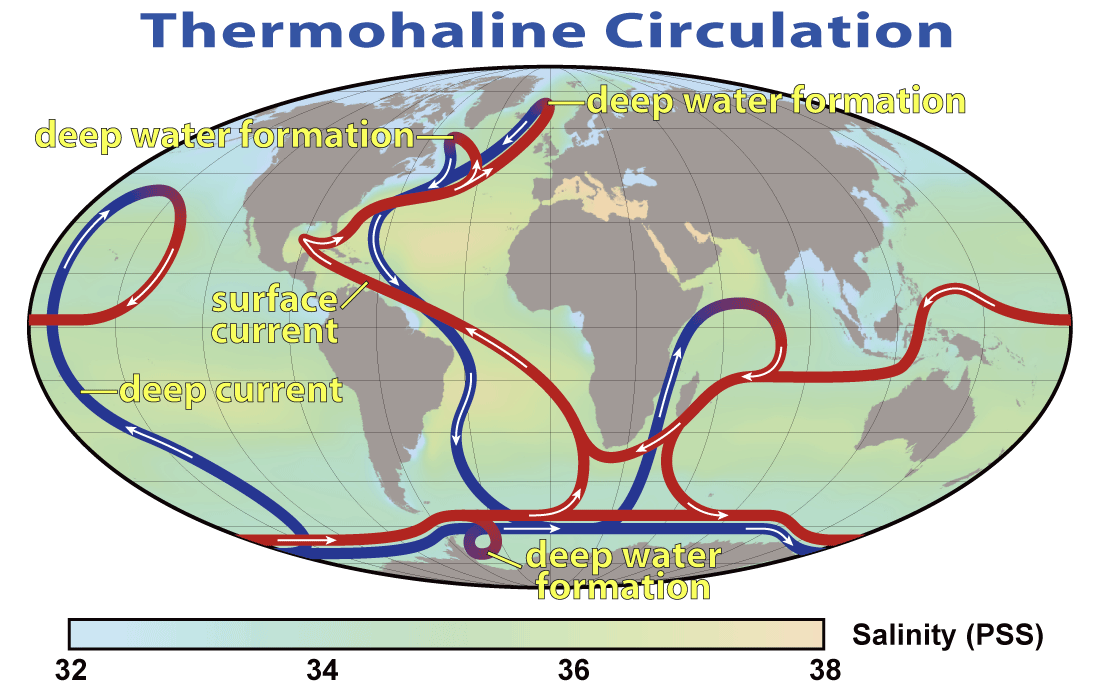
- '' Oceanography , also known as oceanology, is the scientific study of the ocean. ''
- Example: '' It is an important Earth science, which covers a wide range of topics, including ecosystem dynamics; ocean currents, waves, and geophysical fluid dynamics; plate tectonics and the geology of the sea floor; and fluxes of various chemical substances and physical properties within the ocean and across its boundaries. ''
- en: océanographie
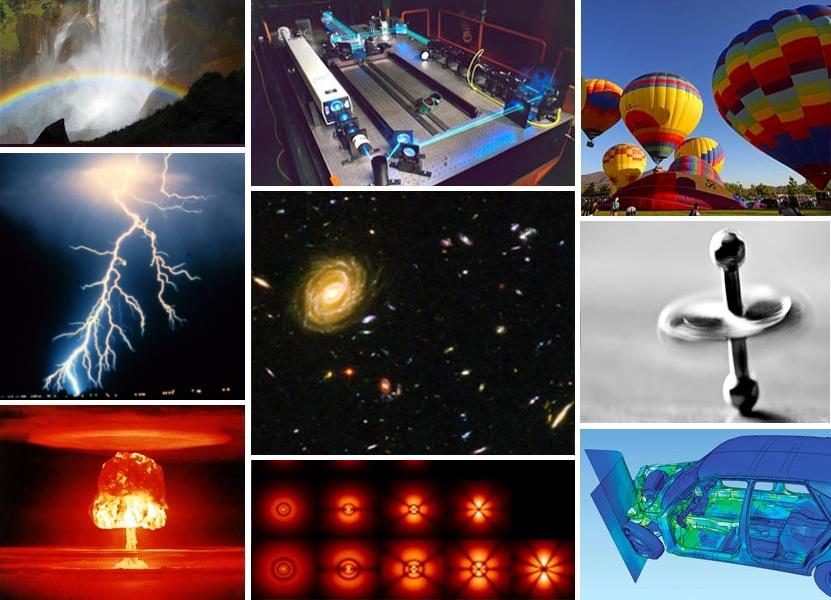
- physics
- noun
- '' Physics is the natural science that studies matter, its fundamental constituents, its motion and behavior through space and time, and the related entities of energy and force. ''
- Example: studies of the movement of planets
- en: physique
- physiology
- noun
- '' Physiology is the scientific study of functions and mechanisms in a living system. ''
- Example: '' As a sub-discipline of biology, physiology focuses on how organisms, organ systems, individual organs, cells, and biomolecules carry out the chemical and physical functions in a living system. According to the classes of organisms, the field can be divided into medical physiology, animal physiology, plant physiology, cell physiology, and comparative physiology. ''
- en: physiologie

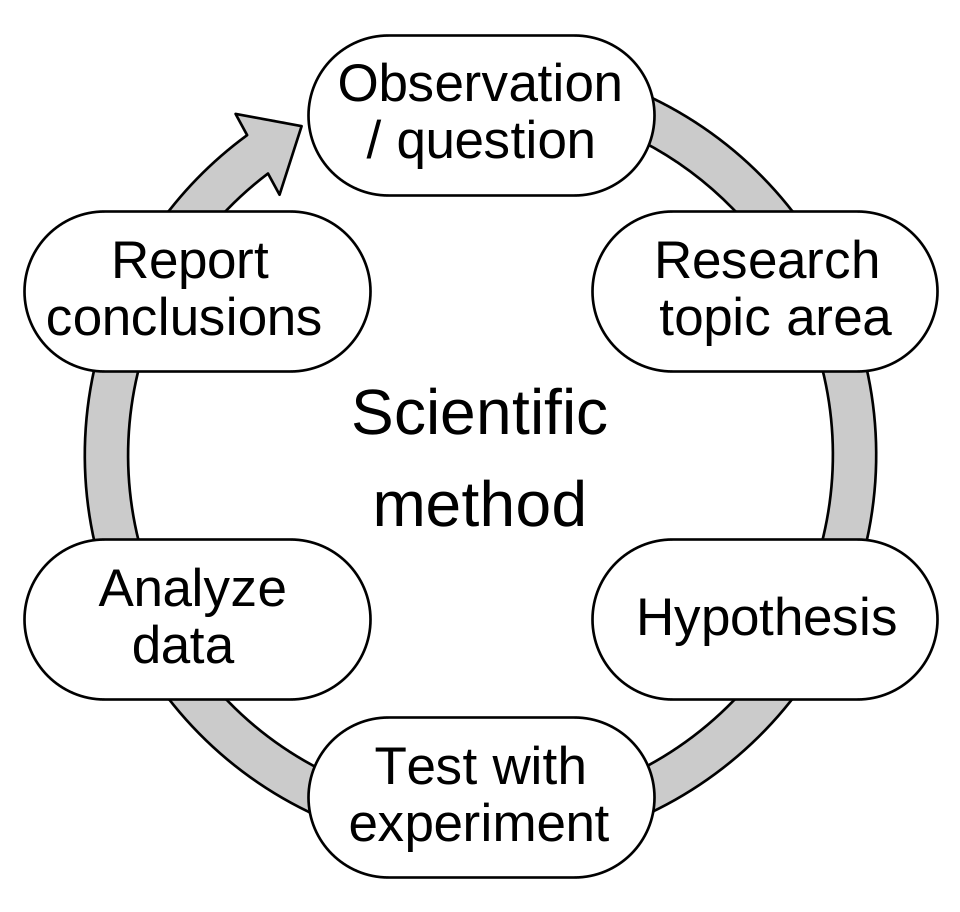
- scientific method
- noun
- '' A method of procedure that has characterized natural science since the 17th century, consisting in systematic observation, measurement, and experiment, and the formulation, testing, and modification of hypotheses. ''
- Example: '' the process in the scientific method involves making conjectures (hypotheses), deriving predictions from them as logical consequences, and then carrying out experiments or empirical observations based on those predictions. ... Scientists then test hypotheses by conducting experiments or studies. ''
- en: méthode scientifique